Most of us spend a large part of the working day sitting – at a desk, in meetings, in the car. The body adapts to the positions it spends the most time in, so long hours in a chair tend to leave the hips tight, the upper back rounded and the glutes doing very little. Add in a lack of time and energy at the end of the day and training can easily drop off the list altogether.
The good news is that you do not need hours in the gym to counter this. Two or three well-planned strength sessions a week can make a noticeable difference to how you feel at your desk and away from it.
Why strength rather than just stretching?
Stretching has its place, but stiffness is often the body protecting a range of motion it does not feel strong in. Strength training through a full range teaches the body that those positions are safe, and builds the muscle that holds you upright when you are tired. It also improves bone health, blood sugar control and energy levels – all useful for anyone with a demanding job.
Four movements worth prioritising
1. A hinge
Deadlift variations, kettlebell swings and hip thrusts train the glutes and hamstrings that switch off when we sit. Learning to hinge well also protects the lower back when you lift things in everyday life.
2. A squat
Goblet squats and box squats build the legs and keep the hips and ankles moving. If getting up from a low chair is harder than it used to be, squatting is the answer.
3. A pull
Rows and pulldowns strengthen the upper back and help counter the rounded-shoulder posture that comes from screens and keyboards. Most desk workers benefit from more pulling than pushing.
4. A carry
Farmer’s carries and suitcase carries train grip, trunk stability and posture all at once. They are simple, hard to get wrong and very effective.
Making it fit your week
Consistency matters far more than the perfect programme. A realistic plan for a busy professional might be two full-body sessions a week built around those four movements, plus short walks or mobility breaks during the working day. Book the sessions in your diary like meetings – they are just as important.
If you have aches and pains already, or simply are not sure where to start, a movement assessment is a sensible first step. It shows which positions you are comfortable in, which need work, and where to begin so that training helps rather than aggravates.
How we can help
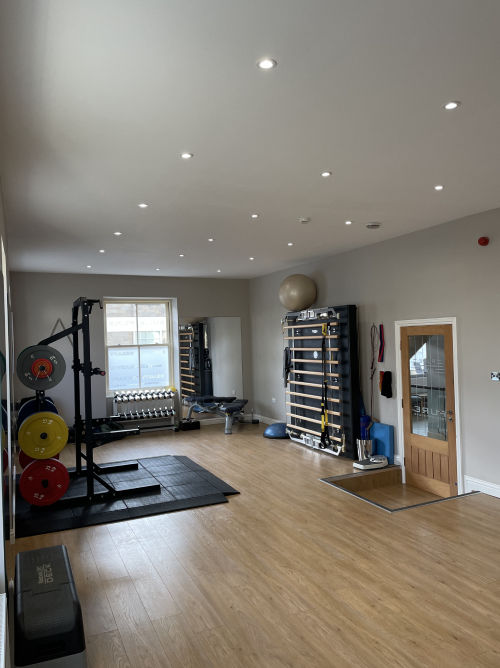
At Pinnacle Black we work with professional office workers and professional athletes alike. Our personal training sessions can be scheduled at your preferred time, and every programme starts with planning and testing so your training is built around you. Request a free consult to talk it through.